

It's generally a good idea to keep national politics out of college sports, but Friday's sports roundtable at the White House was an admission that the current system -- if you want to even call it a system -- is unsustainable.
Former LSU football coach Brian Kelly, in an appearance on Dusty and Danny in the Morning on SiriusXM Radio, was asked about reports that Lane Kiffin's football roster for the upcoming season is $40 million.
“More than 40, I’ll tell you that,” Kelly said.
In simpler times, runners left gym bags full of cash with car keys inside on the front porches of top players. For now though, this is what we have and that's why sports and, yes, political leaders need to talk about it.
Interestingly, with that White House gaggle of about 50 coaches, commissioners, and politicians, guess how many players were invited.
None.
Like it or not, leaders are going to have to bring players or their representatives into this discussion. There need to be changes and controls, especially in the area of eligibility years and the number of transfers a player can make. The mass transfers are the kindling that is fueling gthe current fire.
SEC commissioner Greg Sankey recommended each player be allowed one free transfer. I would add that a player can transfer as often as he or she wants, but with caveats. For football, a second transfer would mean the player sits out the first conference game. A third transfer and you sit out a minimum of three games.
This would trigger lawsuits about restraint of trade, of course, mostly from agents who market their players to other programs on a yearly basis. Despite the threat of lawsuits, I think this a change that could be negotiated and bring more stability and stop the yearly overhaul of many programs.
American Conference commissioner Tim Pernetti was among those in attendance. In a statement, Pernetti called the current situation in college sports "an economic crisis" that "can be solved with open minds."
A statement from Commissioner Tim Pernetti on today's discussions at the White House.#BuiltToRise pic.twitter.com/Vv2qJTUArm
— The American (@American_Conf) March 6, 2026
Well, it might be difficult to find those "open minds" now that players have agents and parents who see what programs like LSU are doing. However, since this is a site dedicated to USF athletics, the entire industry needs to erect some guardrails in a hurry before the system collapses.
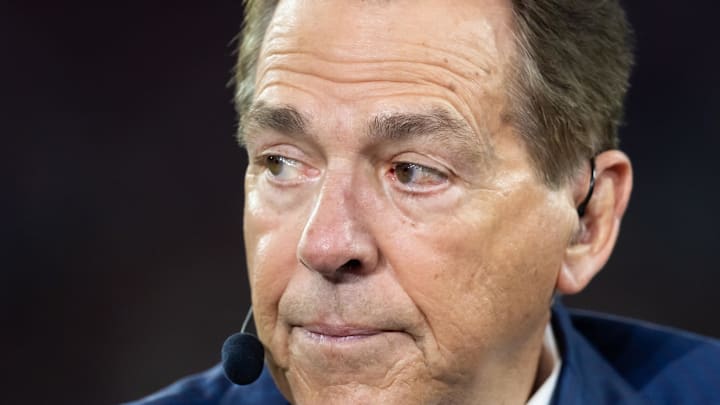
Former Alabama coach Nick Saban perfectly laid out what college athletics faces.
“What are the guiding principles for college athletics?” Saban said. “My goal as a coach was to help (players) create value for themselves in life, and prepare them for a future beyond athletics.”
Right now, those "guiding principles" include outstretched hands for more, more, and more. While USF is in many ways held up as the perfect example of how programs outside the power conferences should conduct their business, even the Bulls aren't prepared to swim in pools the size of LSU.
President Trump, who called the meeting, vowed to fix everything with an executive order he plans to issue in a few days.
Sigh.
He is supposed to be the master dealmaker. As such, he should realize that top-down orders and unyielding regulations are how we got here in the first place. For decades, top NCAA executives bought really nice houses and cars off the labors of athletes who could be penalized for taking a free t-shirt.
The NCAA was an autocracy that held absolute power over its minions, even after a player's eligibility was gone. It controlled controlled and restricted the financial rights of Ed O'Bannon and other athletes regarding the use of their names, images, and likenesses (NIL) after graduation. The NCAA prohibited athletes from receiving licensing revenue for the use of their images in video games and broadcasts.
O'Bannon and the others sued and the courts agreed. With that, the genie was out of the bottle.
After years of iron-fisted NCAA regulations designed to enforce the charade that big-time college football and basketball was amateurism, the system began to change. The strict NCAA rules about eligibility and the number of times a player could transfer began to crumble.
And when it was finally agreed that schools could create a $20.5 million pool to directly pay their athletes, agents and handlers quickly swooped in. It wasn't hard to figure out for the biggest programs to figure a way to stretch that figure into whatever they felt spending.
What does all of this mean for USF? At this point, it's too soon to tell., but there is a lot riding on what happens next. The Bulls have a new football stadium opening in 2027 and there is continuing expansion of the overall athletic program.
CEO of Athletics Rob Higgins and trustee Will Weatherford have repeatedly said the Bulls will do whatever it takes to be competive in today's climate. We aren't going back to the good ol' days, but that doesn't mean that coming years can't be good ones too.
 Add us as a preferred source on Google